

Introduction
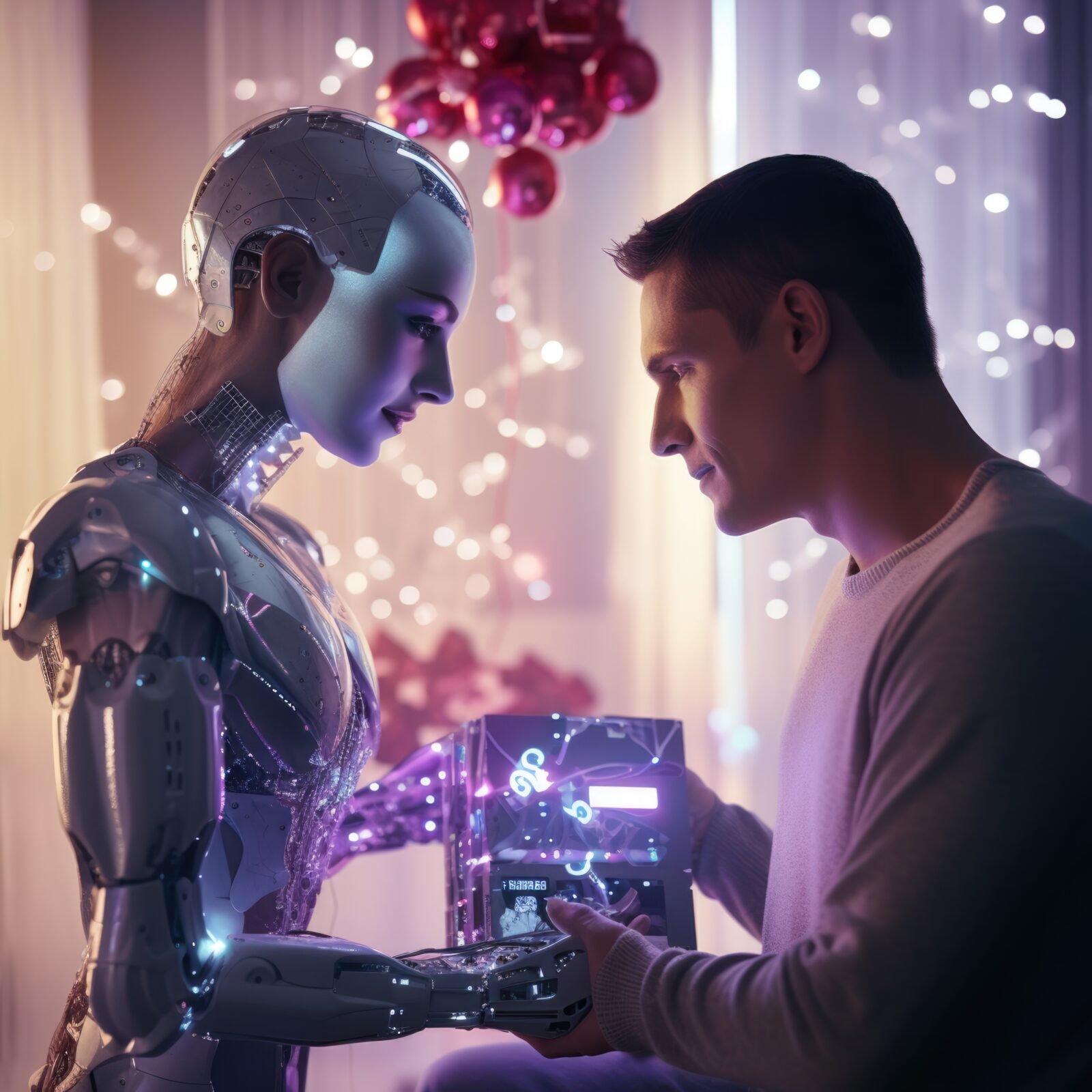
The days of being limited to a text box are over. Multimodal AI—the ability for a single model to process text, image, audio, and video simultaneously—has become the standard interface for the digital world in 2025.
Why it matters in 2025
For decades, the “barrier” between humans and computers was the keyboard. We had to translate our complex, sensory world into lines of text for a machine to understand us. Multimodal AI has shattered that barrier. In 2025, if you want to know why your car engine is making a clicking sound, you don’t describe it in text; you point your phone’s camera at the engine, let the AI “hear” the sound and “see” the oil leak, and get a real-time diagnosis.
This matters in 2025 because of the “Data Explosion.” 80% of the world’s data is unstructured—meaning it’s in videos, voice notes, and images. Previous AI models were blind to this. Now, businesses can analyze a 10-hour security video or 1,000 hours of customer service calls as easily as they would a spreadsheet.
Furthermore, multimodality is the key to Spatial Computing. As devices like the Vision Pro and various AR glasses become mainstream, the AI needs to understand the user’s physical environment in real-time. It needs to know that when you point at a chair and say “make this blue,” you are referring to the physical object in front of you. This “sensory grounding” makes AI far more accurate and less prone to the hallucinations that plagued early text-only LLMs. In industries like healthcare, this means an AI can look at an X-ray while listening to a patient’s symptoms and reading their history, leading to diagnostic accuracy that far surpasses any single-mode analysis. It is no longer about “Large Language Models”; it is about “Large World Models.”
Key Trends & Points
Native Multimodality: Models trained on all data types simultaneously, not just “bolted on.”
Real-time Voice Latency: Conversations with AI that feel human (under 300ms delay).
Video-in, Video-out: The ability to edit or generate video via natural language.
Sensory Fusion: Combining thermal, visual, and audio data for industrial safety.
Emotional Intelligence: AI that can detect sarcasm or frustration in a user’s voice.
Document Intelligence: Understanding the layout, charts, and fine print of 100-page PDFs.
Accessible Tech: AI that describes the world in real-time for the visually impaired.
Multimodal Search: Searching your own photo library for “the time I was wearing a red hat.”
Vision-Language-Action (VLA): AI that sees a messy room and tells a robot how to clean it.
Multilingual Audio Dubbing: Real-time translation that preserves the original speaker’s voice.
Generative Watermarking: Identifying AI-created images and audio to prevent deepfakes.
Synthetic Data Generation: Using multimodal AI to create training data for other models.
Personalized Avatars: Photo-realistic digital twins for video conferencing.
Interactive Ads: Advertisements that “watch” and “listen” to your reactions.
AI Jewelry: Wearables like pins or glasses that act as “multimodal eyes.”
Contextual Retail: Pointing your camera at a dress in the street and finding where to buy it.
Multimodal Coding: Explaining a UI design by drawing it on a napkin and having AI code it.
Bio-multimodality: AI that integrates heart rate and pupil dilation into its responses.
Zero-Shot Image Translation: Changing the “style” of a video in real-time.
Advanced OCR: Reading messy handwriting on historical documents with 99% accuracy.
Real-World Examples
A standout example is Apple’s “Visual Intelligence” on the latest iPhone. Users can click the camera button while walking past a restaurant to see its menu, ratings, and even book a table—all without typing. The AI is “seeing” the signage and “connecting” it to the digital world.
In the retail space, Amazon’s “Rufus” assistant now uses multimodality to help shoppers. A customer can upload a photo of their living room and ask, “Will this rug look good here?” Rufus analyzes the colors, lighting, and dimensions of the photo to provide a recommendation.
In Healthcare, the Mayo Clinic is testing multimodal AI that assists surgeons. During a procedure, the AI monitors the video feed from the surgical camera. If it “sees” a specific type of tissue that might be cancerous or notices a slight nick in a blood vessel that the surgeon missed, it provides an immediate audio alert. This fusion of vision and real-time reasoning is saving lives by acting as a second, “super-human” pair of eyes in the OR.
What to Expect Next
The next step is Haptic Multimodality—AI that can “feel” and “touch.” Through advanced robotics and haptic gloves, AI will soon be able to describe the texture of a fabric or the ripeness of a fruit. By 2026, we will see the first widespread use of AI Personal Assistants that live in our glasses, providing a constant “augmented layer” to our reality. These assistants will whisper the name of the person you’re talking to if you’ve forgotten it or provide real-time subtitles for a foreign language conversation.
We will also see a “War on Deepfakes” as multimodal models become so good at mimicking reality that we can no longer trust our eyes or ears. This will lead to the mandatory adoption of Content Credentials (C2PA)—digital “passports” for every image and video that prove its origin. The future is one where the digital and physical worlds are indistinguishable, and multimodal AI is the bridge that connects them.
Conclusion
Multimodal AI is turning the “World as we see it” into the “World as the computer understands it.” It is the most human-centric technology ever created because it finally speaks our language—the language of sight, sound, and feeling. For developers and creators, this means the canvas has expanded infinitely. We are no longer building apps; we are building experiences that can see, hear, and respond to the nuances of human life.







Leave a comment