
Introduction
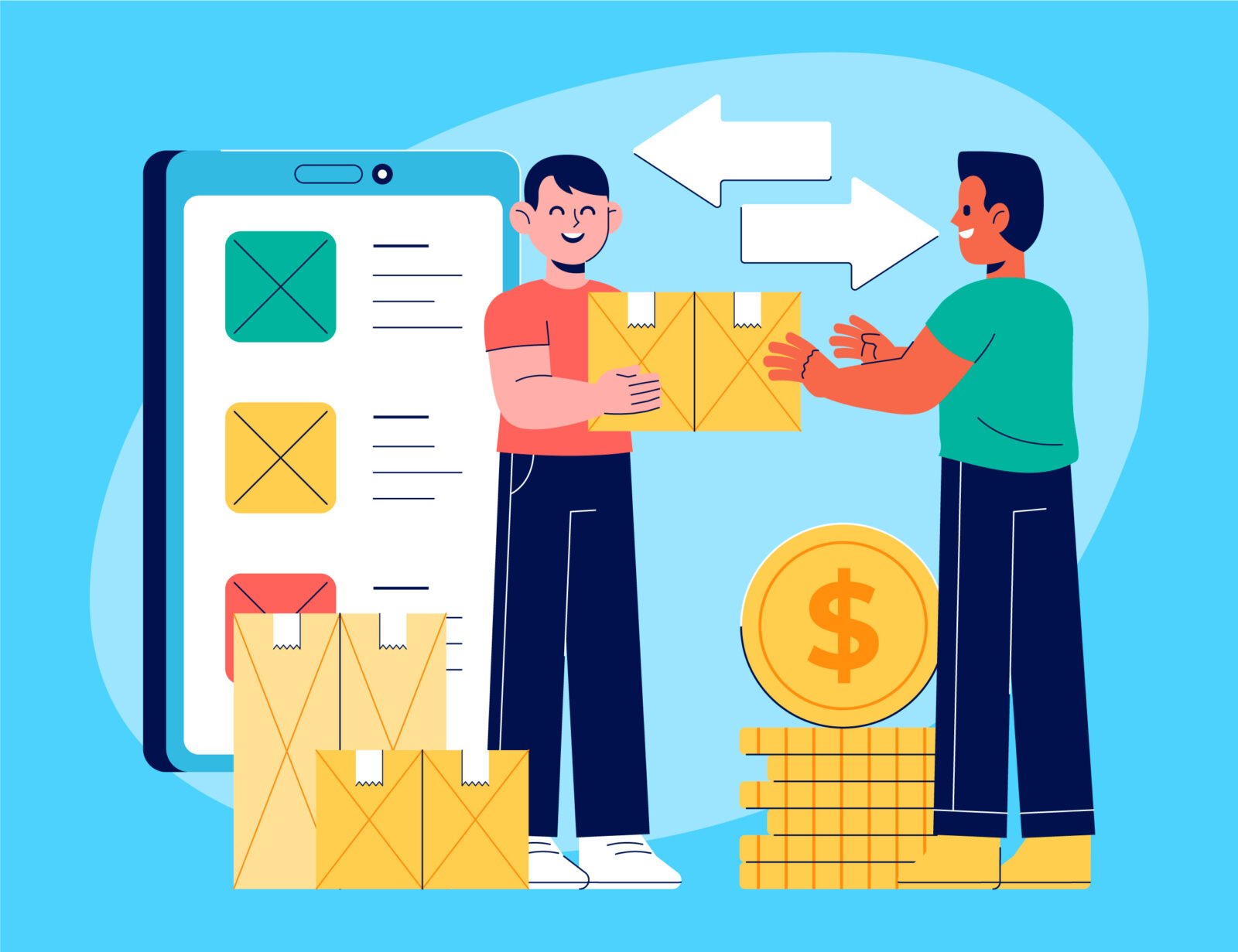
The “Per-User-Per-Month” model is dying. In 2025, the SaaS world is moving toward Usage-Based Pricing (UBP), where customers pay only for the value they consume—whether that’s data processed, emails sent, or AI tokens used.
Why it matters in 2025
For over a decade, the “subscription economy” was built on a simple premise: pay a flat monthly fee for access to software. While this provided predictable revenue for SaaS companies, it often created a “Value Gap” for customers. Smaller companies felt they were overpaying for features they didn’t use, while larger companies felt “punished” by high seat-based costs that discouraged them from rolling out the tool to every employee. In 2025, the market has reached a breaking point.
The catalyst for this shift is Generative AI. Running AI models is expensive—every “prompt” costs the software provider money in compute power. If a SaaS company charges a flat $20/month but a power user generates $100 worth of AI content, the company loses money. Conversely, if a user does nothing all month, they feel cheated. Usage-Based Pricing solves this by aligning cost directly with the “compute” and the “value.”
This matters today because efficiency is the top priority for CFOs. In 2025, businesses are ruthlessly auditing their SaaS stacks. A seat-based model is a “fixed cost” that is hard to justify when budgets are tight. A usage-based model is a “variable cost.” If the business is slow, their software bill goes down. If the business is booming, the bill goes up—but only because they are getting more value. This “pay-as-you-grow” philosophy builds deep trust between the vendor and the customer.
Furthermore, UBP is the ultimate Growth Hack. It lowers the “Barrier to Entry.” A startup can start using a powerful enterprise tool for $5 a month. As they scale, they naturally pay more. There’s no “sales friction” of having to upgrade to a “Pro Plan” just to add one more user. In a 2025 landscape where customer acquisition is harder than ever, UBP acts as a frictionless “Land and Expand” strategy. It turns the SaaS company into a partner that is incentivized to help the customer use the product more, rather than just a landlord collecting rent.
Key Trends & Points
- The “Hybrid” Model: A small base fee plus usage-based “top-ups.”
- AI Token-Based Billing: Pricing based on the complexity of AI tasks performed.
- Outcome-Based Milestones: Paying only when a specific business goal is reached.
- Real-time Billing Dashboards: Letting customers see their bill growing in real-time.
- Threshold Alerts: Automatically notifying users when they hit 80% of their “budget.”
- The Death of the “Shelf-Ware”: No more paying for seats that are never logged into.
- Unit Economics Alignment: SaaS costs moving in sync with the user’s revenue.
- Credit-Based Systems: Buying “points” that can be spent across different features.
- Infrastructure-Led Pricing: Tying SaaS costs to underlying cloud/storage usage.
- The “Free-to-Paid” Glide Path: Seamlessly moving from free to paid without a credit card.
- Variable Cost Engineering: Developers optimizing code to reduce “billable events.”
- FinOps for SaaS: Businesses using AI to optimize their own usage-based bills.
- Seasonal Pricing Dynamics: Costs that naturally dip during a business’s off-season.
- Volume Discounts: Automatically lowering the “unit price” as usage scales.
- Data-Inbound Free models: Charging for “data out” but not “data in.”
- The “Seat-less” SaaS: Apps where the number of users is irrelevant/infinite.
- Enterprise Consumption Agreements: Bulk-buying usage units for the year.
- Pricing Transparency: Moving away from “Contact Sales for Pricing.”
- Micro-Transactions for Software: Paying pennies for a single, one-off AI task.
- API-First Billing: Charging per API call rather than per UI login.
- Predictive Invoicing: AI telling you what your bill will likely be next month.
- The Rise of the “Billing Architect”: A new role focused on complex pricing logic.
- User-Centric Limits: Allowing managers to set “caps” on how much an employee can spend.
- Incentivized Efficiency: Giving customers “credits” for using the software during off-peak hours.
- Value-Linked Tiers: Usage is cheap for basic tasks but expensive for “expert” AI tasks.
Real-World Examples
The poster child for usage-based pricing is Snowflake. Their data warehousing platform doesn’t charge per user; it charges per second of “compute” used to query data. This allowed them to grow faster than almost any SaaS company in history because customers could start small and only pay massive bills once they were getting massive value from their data. In 2025, they have refined this to include “AI Data Cloud” credits, where customers pay differently for raw storage vs. AI-powered insights.
In the communication space, Twilio has always been usage-based. You pay per SMS sent or per minute of voice call. This allowed them to power everything from tiny apps to Uber and Airbnb. If Uber has a slow night, their Twilio bill automatically drops. This flexibility is what made them the “infrastructure of the internet.”
A newer example is Midjourney and other AI-generative tools. They use a “GPU-Hour” or “Credit” model. Users quickly understood that generating a high-definition, complex image takes more “work” than a simple sketch, and they are willing to pay for that specific consumption. This has prevented the “all-you-can-eat” fatigue that ruined early streaming services.
Lastly, look at Stripe. They are the ultimate usage-based SaaS. They don’t charge a monthly fee for their “billing” software; they take a small percentage of every transaction. Their entire company is built on the success of their customers. If a Stripe customer makes more money, Stripe makes more money. This “Pure Alignment” is the gold standard of 2025 SaaS pricing.
What to Expect Next
We are heading toward “Dynamic Value Pricing.” Imagine a SaaS tool that costs more on Monday mornings when demand is high and compute is expensive, but is 90% cheaper on a Sunday night. AI will manage these dynamic price shifts, much like Uber’s surge pricing, to optimize server load and customer cost.
We will also see “The Great Un-Bundling of the Seat.” By 2026, the idea of paying for a “seat” will seem as antiquated as paying for long-distance phone calls. Software will become an “invisible utility” that is always on and always available to everyone in a company. The “login” will be free; the “action” will be billable.
Finally, “Cross-SaaS Credit Systems” may emerge. You might buy a “Productivity Credit” that can be spent across multiple different tools—some for your CRM, some for your AI writer, and some for your project management. This would simplify the “Subscription Hell” that businesses currently face, turning SaaS into a single, fluid resource. The companies that resist this shift and cling to the “Fixed Subscription” will find themselves replaced by leaner, usage-based competitors who are more than happy to let customers pay for exactly what they get.
Conclusion
Usage-based pricing is the “Honesty Policy” of the software world. It forces SaaS companies to build products that people actually use, rather than products that just sit on a shelf. In 2025, the most successful companies will be those that lower the barrier to entry and align their financial success with the actual success of their customers. The subscription era isn’t over, but the “Subscription Tax” is. The future is variable, transparent, and built on value.







Leave a comment