

Introduction
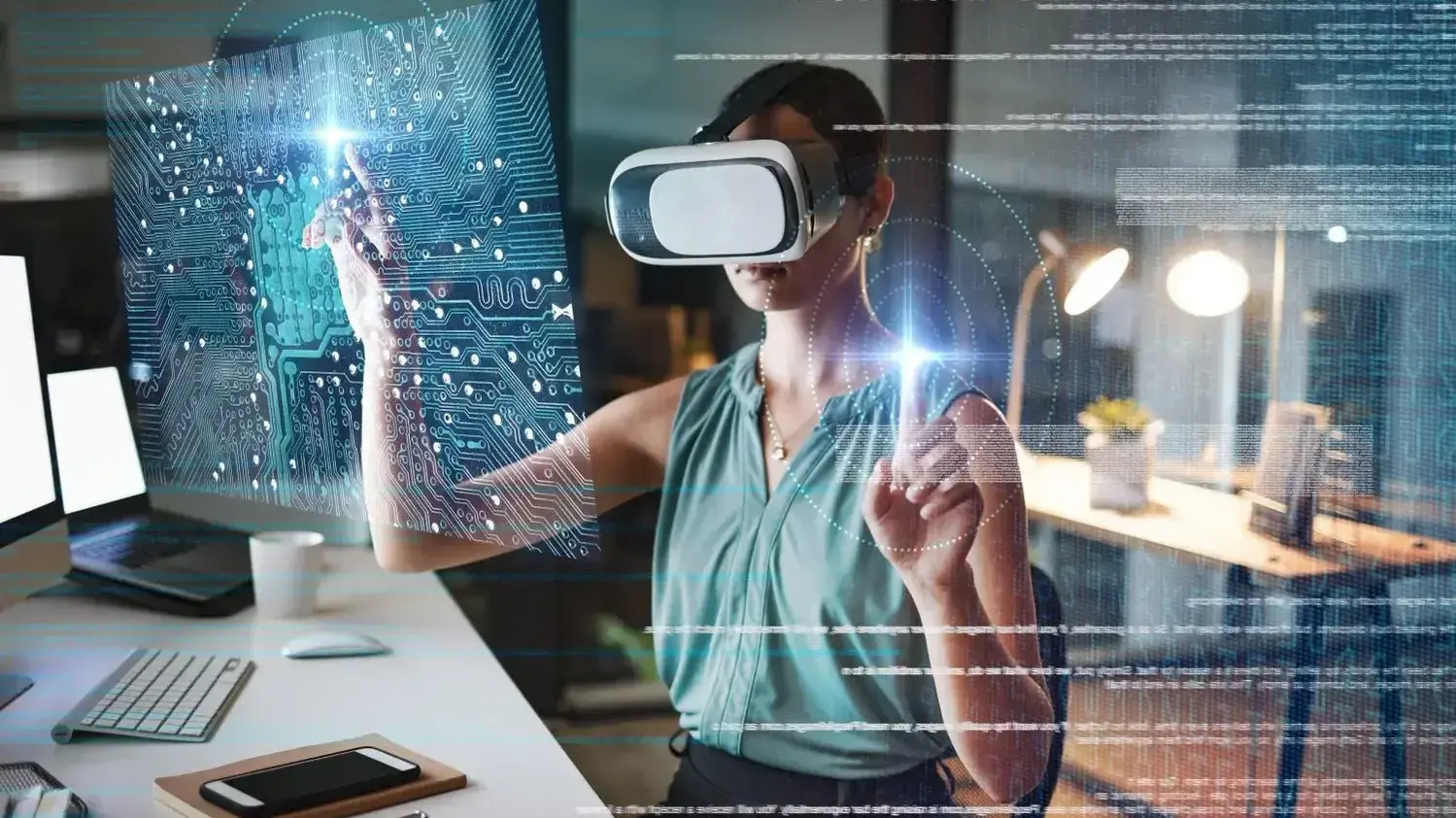
The “flat screen” era is reaching its conclusion. In 2025, Spatial Computing has redefined the way we work, learn, and collaborate, moving our digital lives off of our monitors and into the three-dimensional space around us.
Why it matters in 2025
For forty years, our interaction with computers was limited by the “frame” of a screen. Whether it was a desktop, a laptop, or a smartphone, we were always looking at our data. In 2025, spatial computing allows us to be in our data. This matters today because the “productivity ceiling” of flat screens has been hit. We can’t fit any more tabs on a 13-inch laptop, and Zoom calls have reached the limits of human engagement.
Spatial computing—the umbrella term for technology that blends the digital and physical worlds (including AR, VR, and MR)—is now a $182 billion industry. The catalyst was the “Prosumer” wave led by devices like the Apple Vision Pro and Meta Quest 3, which proved that these aren’t just “gaming goggles” but “spatial workstations.”
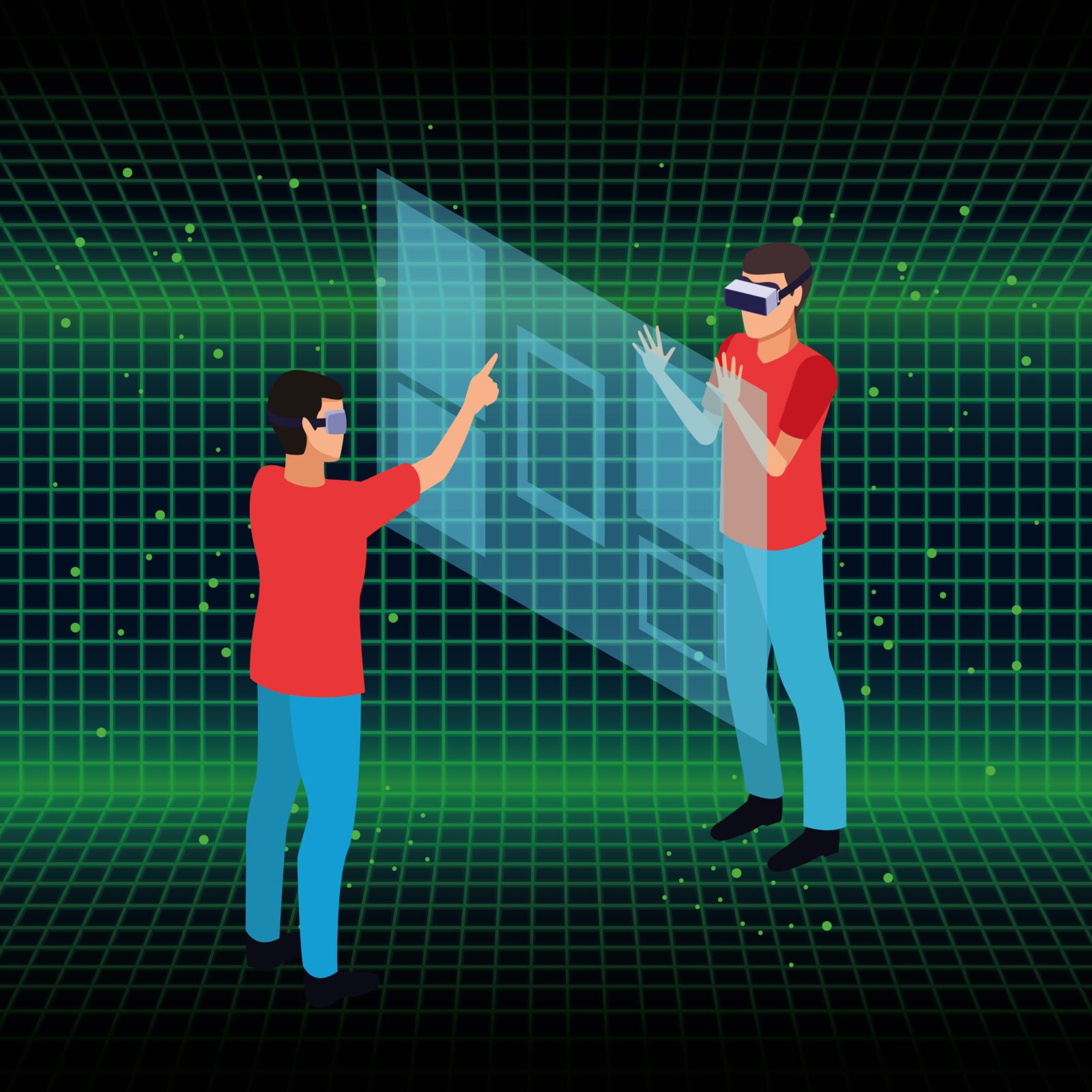
In the workplace of 2025, spatial computing matters because it restores Human Context. In a remote-first world, “spatial personas” allow you to sit in a virtual room with a colleague’s avatar, where you can both point at a 3D whiteboard and “feel” each other’s presence. This eliminates the “flatness” of digital communication and reduces “Zoom fatigue.”
For the industrial workforce, it is a safety and training revolution. A frontline worker in 2025 doesn’t look at a paper manual; they wear lightweight glasses that overlay 3D instructions directly onto the machine they are fixing. If they get stuck, a remote expert can “see what they see” and draw a digital arrow in their field of vision. This “Heads-Up, Hands-Free” workflow is increasing accuracy by 33% and cutting onboarding time by 75% across the manufacturing and healthcare sectors. Spatial computing is not a new “device”; it is a new “medium” for human intelligence.
Key Trends & Points
- The Infinite Canvas: Replacing physical monitors with floating, resizable digital windows in your room.
- Spatial Personas: High-fidelity avatars that mimic your eye movements and expressions in real-time.
- Eye and Gesture Tracking: Moving away from mice and keyboards toward natural human movement.
- Enterprise Mixed Reality: Using “Pass-through” video to stay present in the office while seeing digital data.
- Spatial Audio: Sound that comes from the exact 3D location of a digital object or person.
- 3D Collaboration Hubs: Virtual “War Rooms” where global teams meet to solve complex problems.
- AR Industrial Overlays: Digital “blueprints” projected onto physical construction sites.
- The Death of the Desk: The ability to work from anywhere (a plane, a park) with a full multi-monitor setup.
- Remote Expert Assistance: “See-what-I-see” technology for field technicians and surgeons.
- Medical Spatial Planning: Visualizing a patient’s CT scan as a 3D hologram before surgery.
- Retail “Try-Before-You-Buy”: Placing a 3D model of furniture in your actual living room via your phone or headset.
- Lightweight Smart Glasses: The transition from bulky headsets to “everyday” fashion-forward frames.
- Spatial Web (Web 3.0): Websites designed to be explored in 3D rather than scrolled in 2D.
- Volumetric Video: Recording real-life events in 3D so they can be “replayed” from any angle.
- Indoor Navigation: AR arrows on your floor leading you to your gate at an airport or a product in a store.
- Haptic Feedback 2.0: Gloves and suits that let you “feel” digital objects in 3D space.
- Privacy in Spatial Computing: Managing the “eye-tracking” data and room-mapping data of users.
- Digital Twins in 3D: Stepping “inside” a digital twin of a factory to inspect its performance.
- Spatial Education: Students “walking through” ancient Rome or “dissecting” a virtual frog.
- Real-Time Language Translation: AR subtitles appearing over the head of someone speaking a foreign language.
- Accessible Design: Tools that help the visually or hearing impaired “see” or “feel” their environment better.
- Cloud-Rendered Spatial: Offloading the heavy 3D processing to the cloud to keep headsets light.
Real-World Examples
In 2025, Boeing is a leader in spatial productivity. Their technicians use augmented reality headsets while wiring complex aircraft cockpits. Instead of flipping through a 1,000-page manual, they see a digital “map” of the wires superimposed over the physical ones. The system alerts them if they are about to connect the wrong wire. This has reduced wiring errors to near-zero and cut the time required for the task by nearly half.
In healthcare, Cleveland Clinic has integrated spatial computing into their medical education. Students no longer just look at drawings of the human brain; they use spatial headsets to walk around a 10-foot-tall holographic brain, “pulling apart” the different lobes to see how they connect. Surgeons at the clinic also use mixed reality during actual operations to see a 3D “X-ray” of the patient’s internal organs projected directly onto the patient’s body, helping them avoid critical blood vessels and nerves.
In the world of luxury retail, Gucci and Louis Vuitton have embraced the “Spatial Storefront.” Customers can use their smartphones or headsets to “place” a virtual boutique in their own home. They can walk through the racks, see the “drape” of the fabric on a life-sized avatar, and make a purchase. This has significantly reduced return rates because customers have a much better sense of the scale and style of the items before they buy.
Finally, Accenture has moved its entire global onboarding process into a spatial environment called the “Nth Floor.” Every new hire, regardless of where they live, visits this virtual office on their first day. They meet their teammates, attend orientation sessions, and explore the company’s history in an immersive museum. This has helped the company maintain a strong culture despite having hundreds of thousands of remote employees, proving that “space” is more important than “place.”
What to Expect Next
The next two years will be defined by “The Shrinking Headset.” By 2027, the technology inside the bulky Vision Pro will fit into frames that look like ordinary Ray-Bans. This will mark the transition from “Spatial Computing as a task” to “Spatial Computing as an lifestyle.” We will stop “putting on a headset” and simply “put on our glasses.”
We will also see the rise of “Spatial AI Agents.” Instead of a chatbot that sits in a window, your AI assistant will be a spatial presence. It will “walk” with you through a grocery store, highlighting the items on your list and suggesting recipes based on what it “sees” in your cart. It will become a “co-pilot for reality.”
Finally, we will face the “Spatial Privacy Crisis.” As these devices map every room we enter and track every glance we make, the demand for “Sovereign Spatial Data” will skyrocket. We will see the development of “Privacy-First Spatial OS,” where the data that maps your home never leaves the device. Just as we learned to protect our passwords, in 2026, we will have to learn how to protect our “spatial footprint.”
Conclusion
Spatial computing is the “Final Interface.” It is the moment when technology finally learns to speak the language of humans, rather than forcing humans to speak the language of machines. By 2025, it has moved from a novelty to a necessity, providing the solution to our “screen-saturated” world. For businesses, the challenge is to stop thinking in pages and start thinking in volumes. Those who can master the “3D Canvas” will build deeper connections with their employees and customers, creating a world where the digital is just as real as the physical.








Leave a comment